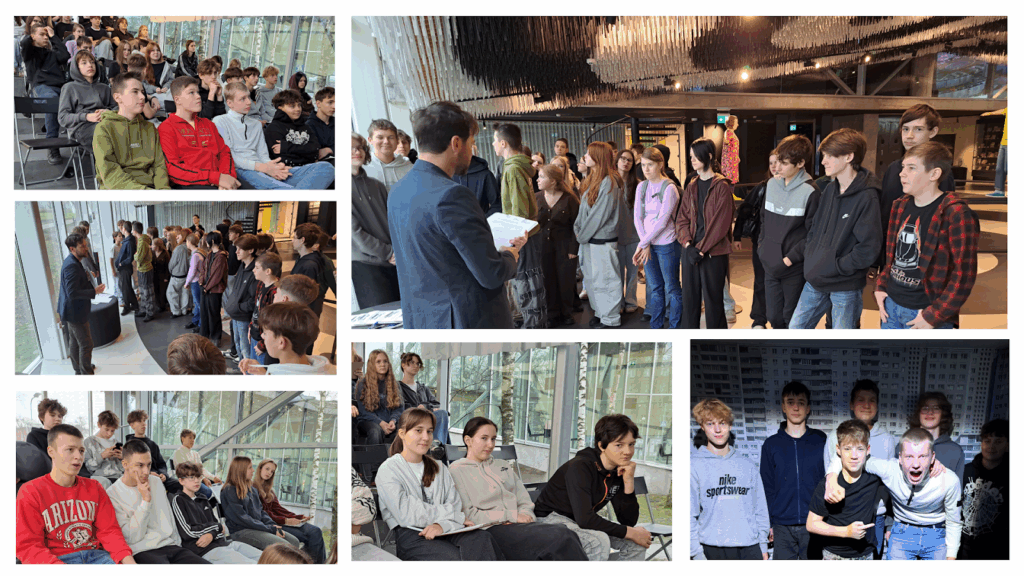
How to distinguish truth from falsehood in the never-ending news feed? Who creates and publishes fake news and why? These questions, more topical than ever, were the central theme of a field trip to the Museum of Freedom, conducted on 20 November by history teacher Igor Kalakauskas for three eighth-grade students from our school.
For the students, this was in many ways their first exposure to the complex world of information warfare and manipulation. For it is not until the next year, in ninth grade, that they will begin to explore in depth the events of the 20th century, which have been largely shaped by today’s media and propaganda tools. This excursion was an important preliminary step, allowing them to take a look behind the scenes of history and to understand the mechanisms that influence our consciousness today.In the framework of the educational project “Strategies of misinformation through the generations”,
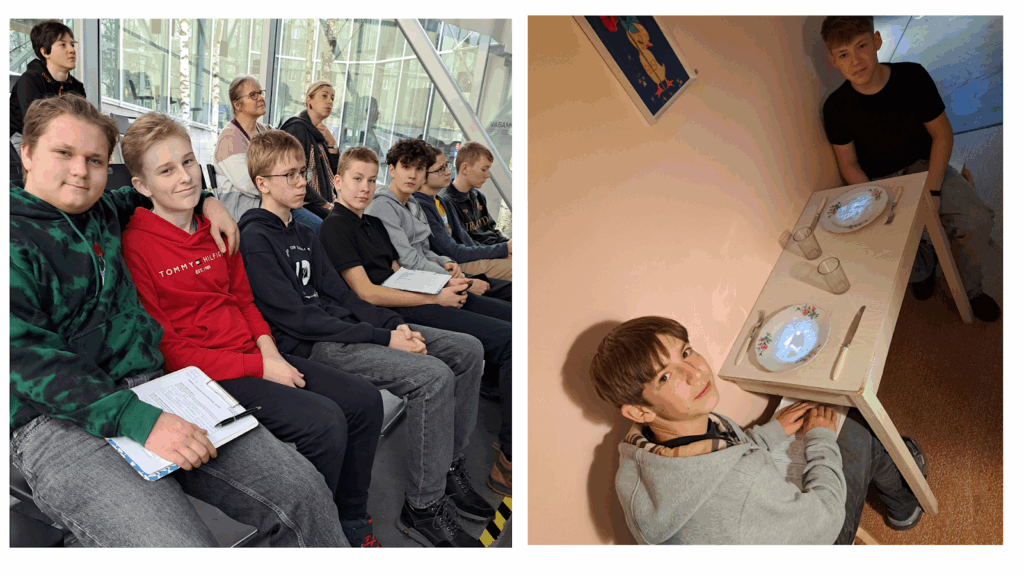
Of particular interest was the discussion on how the same fake news could be understood differently by our grandmothers, grandfathers and today’s teenagers. Students reflected on the ethical side of manipulation and the importance of maintaining critical thinking in order to appreciate and defend fragile concepts such as national sovereignty and democratic freedoms.
An important part of the visit was a practical lesson: guests were not just given permission, but offered the chance to use their smartphones! Guided by a museum educator, they learned a simple but very effective strategy for analysing information. In the future, this practical tool could help to check the credibility of sources, recognise the tricks of fake news creators and identify deepfakes – highly realistic videos created using artificial intelligence.
The tour became not just a history lesson, but a real training in digital literacy and media hygiene. One would like to believe that the knowledge and skills acquired will become a trusted shield for our students in today’s information landscape, helping them to be not just consumers of information, but literate and responsible evaluators of it.