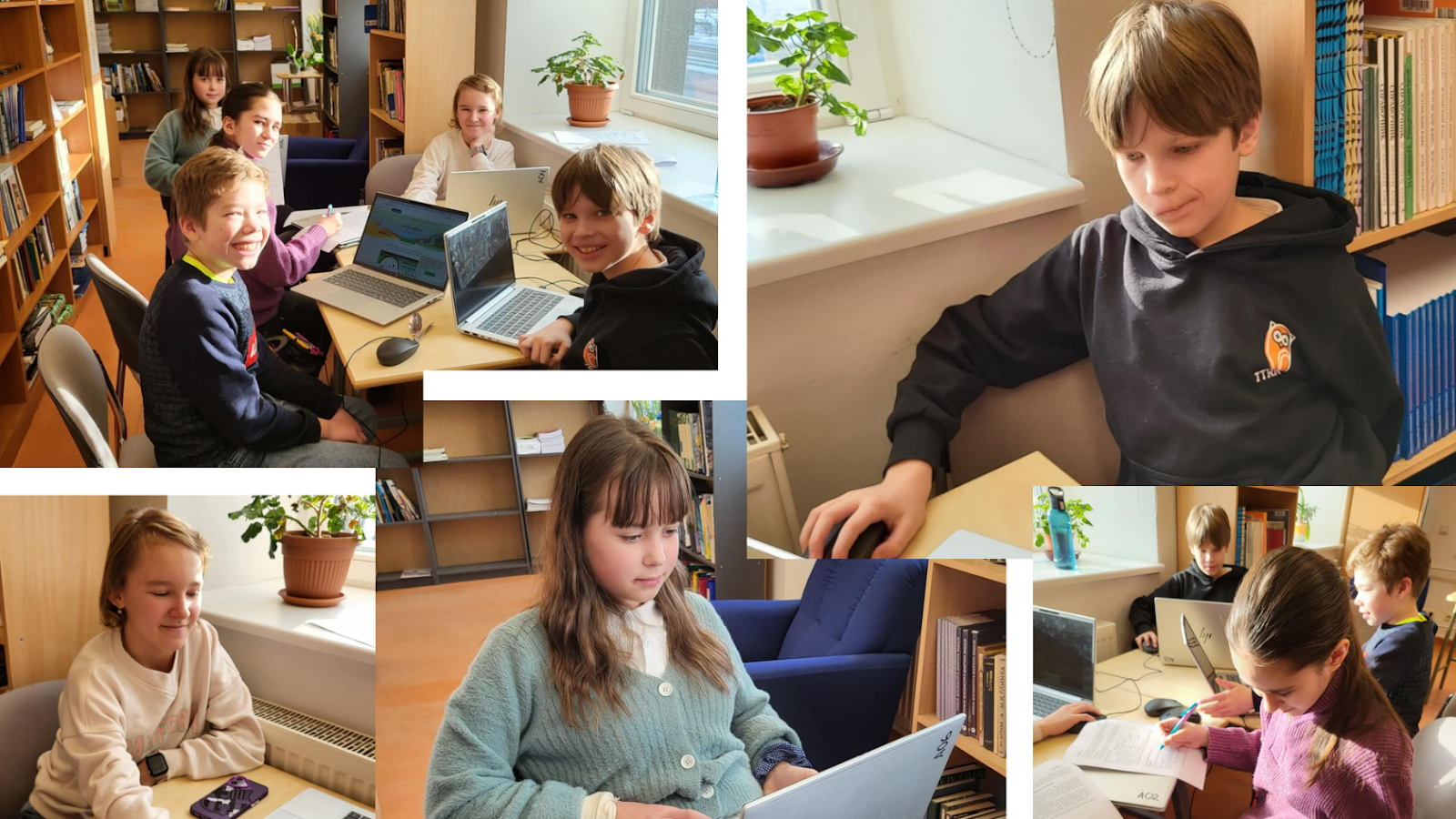
The green technology course took students from an idea to hands-on experiments
What happens when more light hits a solar panel? How can used plastic be turned into a new object, and what could be done at school to make waste sorting easier? Our high school students sought answers to these and many other questions in a green technology course that ran from September 2025 to June 2026.
The goal of the course was to introduce young people to environmentally friendly technologies and show them how these work in real life. Throughout the school year, students gained knowledge about renewable energy and climate change, as well as eco-design, the circular economy, and material reuse. In addition to theory, it was important to try things out, experiment, and develop solutions on their own.
The ideas took shape in workshops
The course began with an introduction to green technology and the search for environmentally sustainable solutions. The students then developed their ideas through group work and workshops, where they practiced prototyping and eco-design.
At the Vivita Solutions Lab, participants explored ways to give used plastic a new lease on life. Students learned about different types of plastic and created new objects and prototypes from recycled materials. In another workshop, participants brainstormed ways to make waste collection at school more understandable and convenient. These ideas led to prototypes of collection bins, which were designed and manufactured using digital design and CNC technology.
“It was important that the students not just discuss the problem, but that they be able to think through their own solution, develop it, and test it.”
The course also examined how environmentally friendly principles work outside of school. During a visit to Lindström, students learned about water and energy-saving solutions used in industry, automation, and reuse. Meanwhile, an eco-design workshop held at TalTech explored the product life cycle: where materials come from, how much energy is consumed during production, and how to make products more durable and easier to recycle.
Experimenting with Solar and Wind Energy on Your Own
Renewable energy topics were explored in a particularly hands-on way during the workshops at the Energy Discovery Center. In the solar energy workshop, students built electrical circuits, measured voltage, and investigated how different conditions affect the operation of a solar panel. In the wind energy workshop, they designed and built a prototype of a wind-powered car, which they then tested and refined.
During the course, the students also discussed climate change, energy conversion, and everyday energy use. They considered ways to reduce consumption and what choices can help conserve natural resources.
The school received teaching materials on renewable energy
One of the project’s most lasting outcomes is the renewable energy educational kits provided to the school. These kits allow students to explore energy production and conversion through hands-on experiments even after the course has ended. The teaching materials can be used, for example, to learn about the principles of solar and wind energy and to connect them to topics in physics, chemistry, and green technology.
In this way, the knowledge gained during the course continues to be applied in the school’s day-to-day teaching. Students can explore renewable energy solutions on their own and see how that knowledge translates into experiments and practical skills.
At the end of the course, the students presented their green solution projects. What they had learned over the course of the year helped them move from identifying a problem to finding a possible solution and presenting it. Perhaps the most valuable insight was the realization that environmentally friendly changes often begin with curiosity, collaboration, and the desire to try something out for oneself.


Funded by the Estonian government